
Transform Spaces, Inspire Lives: Build a Creative Career with an Interior Designing Course in India
Introduction: Turn Your Creative Vision into a Professional Career
Every beautiful space tells a story. From elegant living rooms and modern offices to luxurious hotels and welcoming commercial spaces, interior design shapes how people live, work, and feel. Today, people want more than attractive interiors. They seek comfort, functionality, smart space planning, and designs that reflect their personalities. As a result, skilled interior designers have exciting opportunities across residential, commercial, hospitality, and retail projects. An Interior Designing Course in India can help aspiring designers turn their creativity into practical skills and professional expertise. With the right training, students can learn to plan spaces, select materials, create layouts, and present their ideas with confidence. Whether you are a student, graduate, working professional, or creative individual, interior design can open doors to a rewarding career. At EDUCADD Hadapsar, aspiring designers can explore industry-relevant design concepts and develop the foundation needed to pursue opportunities in this growing field.
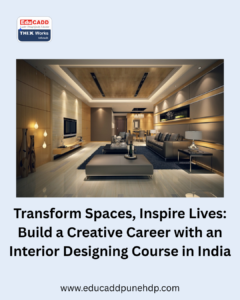
Build a Creative Career with an Interior Designing Course
Part One: Discover the World of Interior Design
Interior Design: Where Creativity Meets Everyday Living
Interior design combines creativity, technical knowledge, and practical problem-solving to improve indoor environments. Designers consider furniture placement, lighting, colours, textures, materials, and circulation before creating a balanced space. Moreover, they understand how people use different rooms and adapt designs to their needs. For example, a small apartment may require multifunctional furniture and clever storage, while a corporate office needs comfortable workstations and collaborative areas. Therefore, successful designers focus on both appearance and usability. An Interior Designing Course in India introduces learners to these essential principles and helps them understand how design decisions influence everyday experiences. Through guided learning and practical exercises, students can begin transforming imaginative ideas into thoughtful interior concepts.
Why Interior Design Is Becoming a Popular Career Choice
India’s expanding residential, commercial, hospitality, and retail sectors create opportunities for professionals who understand modern interior spaces. Homeowners want personalised interiors, businesses seek productive workplaces, and hospitality brands invest in memorable guest experiences. Consequently, interior designers contribute to projects of different sizes and styles. Renovation projects also create opportunities for professionals who can improve existing spaces without unnecessary expenditure. Furthermore, growing interest in sustainable materials, smart homes, and space-efficient furniture continues to influence design preferences. An Interior Designing Course in India helps students understand these evolving requirements and prepare for industry expectations. Although opportunities vary by location, experience, and portfolio quality, dedicated learners can build promising careers by combining creative thinking with practical design knowledge.
Essential Skills Every Aspiring Interior Designer Should Develop
Great interior designers need more than artistic talent. They must understand proportions, spatial relationships, colour combinations, lighting principles, and material selection. Communication also plays an important role because designers regularly discuss requirements with clients, contractors, suppliers, and other professionals. In addition, problem-solving helps them manage limited budgets, challenging layouts, and changing project requirements. Attention to detail supports accurate drawings and coordinated design elements. Similarly, time management helps designers organise multiple tasks and meet project deadlines. During an Interior Designing Course in India, students should focus on developing these abilities through exercises, assignments, and design projects. Over time, consistent practice can improve their confidence and prepare them to handle real-world design challenges more effectively.
Master Space Planning for Beautiful and Functional Interiors
Space planning forms the foundation of every successful interior project. It involves arranging furniture, identifying circulation paths, defining functional zones, and making the best use of available floor space. For instance, a compact bedroom may benefit from a sliding wardrobe, a well-positioned bed, and layered lighting. Meanwhile, an open-plan office requires a thoughtful balance between collaborative areas and private workstations. Designers must also consider accessibility, ventilation, natural light, and the client’s lifestyle. Therefore, space planning requires both imagination and logical thinking. A structured Interior Designing Course in India can introduce students to floor plans, furniture layouts, measurements, and ergonomic principles. These skills help future designers create spaces that look appealing while supporting comfort, movement, and practical daily activities.
Explore Colours, Textures, Materials, and Lighting
Colours and materials influence the mood, character, and visual balance of an interior. Soft neutral shades can create a calm atmosphere, while carefully selected accent colours add personality. Similarly, wood introduces warmth, glass creates visual openness, and stone can provide a sophisticated finish. Lighting also changes how people perceive colours, textures, and room dimensions. Designers often combine ambient, task, and accent lighting to create flexible environments. However, every selection must suit the intended function, maintenance requirements, available budget, and overall design concept. An Interior Designing Course in India can help learners understand colour theory, material properties, finishes, and lighting techniques. By experimenting with different combinations, students can develop their own design style while learning to make informed, practical choices.
Learn Interior Design Software for Professional Presentations
Digital tools help interior designers communicate ideas clearly and accurately. AutoCAD supports technical drawings and floor plans, while SketchUp helps users develop three-dimensional models. Revit can support coordinated building models and interior documentation, depending on the project workflow. Meanwhile, rendering tools such as V-Ray can produce realistic visual presentations that help clients understand proposed designs. These applications also make it easier to revise layouts, explore materials, and compare design alternatives. Therefore, software knowledge can strengthen a designer’s professional profile. A quality Interior Designing Course in India should help students connect design principles with relevant digital tools. By practising drawings, modelling, and presentation techniques, learners can create portfolio projects that demonstrate their technical abilities and creative thinking.
Understand Furniture Design and Interior Styling
Furniture and accessories contribute significantly to the comfort and personality of an interior. Designers select furniture according to room dimensions, intended use, user preferences, and the overall design theme. For example, a contemporary living room may combine a simple sofa, a functional coffee table, and carefully chosen decorative elements. However, adding too many objects can make a space feel crowded. Interior styling requires balance, proportion, texture, and restraint. Designers must also consider durability, ergonomics, maintenance, and budget when recommending furniture. Through an Interior Designing Course in India, students can explore furniture arrangements, decorative themes, fabric selection, and accessory placement. These skills enable them to develop cohesive interiors that feel inviting, practical, and visually appealing.
Part Two: Build Your Interior Design Career
Gain Practical Experience Through Design Projects
Practical experience helps students understand how design concepts work beyond textbooks. A bedroom redesign, compact apartment layout, office interior, or café concept can teach valuable lessons about planning and presentation. During these projects, learners can prepare floor plans, select materials, develop 3D models, and explain their design decisions. Furthermore, project work encourages students to solve problems independently and respond to feedback. It also provides opportunities to explore different styles, from minimalist and contemporary interiors to traditional and industrial themes. An Interior Designing Course in India becomes more valuable when students regularly practise these activities. By completing well-presented projects, learners can build a portfolio that demonstrates their progress and gives prospective employers or clients a clearer understanding of their capabilities.
Discover Career Opportunities in the Interior Design Industry
Interior design offers several career paths for individuals with suitable skills and experience. Graduates may explore roles such as junior interior designer, interior design assistant, CAD drafter, 3D visualiser, space planner, or design consultant. Some professionals specialise in residential interiors, while others focus on offices, retail outlets, restaurants, hotels, or exhibition spaces. Additionally, experienced designers may establish independent consultancies or work with architects, builders, furniture brands, and design studios. Each path requires different levels of technical expertise, communication, and project responsibility. An Interior Designing Course in India can provide a starting point for exploring these options. However, career progression depends on practical ability, portfolio quality, professional networking, location, and continued learning.
Understand Sustainable and Smart Interior Design Trends
Modern interior design increasingly considers environmental responsibility alongside comfort and appearance. Designers can explore energy-efficient lighting, durable materials, natural ventilation, recycled finishes, and furniture made from responsibly sourced resources. These choices may reduce waste and improve the long-term usability of a space. At the same time, smart lighting systems, automated curtains, and connected home controls offer new ways to manage indoor environments. Nevertheless, technology and sustainability must serve the user’s actual needs rather than become unnecessary additions. Students pursuing an Interior Designing Course in India should therefore learn to evaluate materials, energy use, maintenance, and emerging technologies. Understanding these considerations can help future designers create spaces that respond to changing lifestyles while balancing practicality, aesthetics, and environmental awareness.
Build a Strong Portfolio That Attracts Employers and Clients
A professional portfolio communicates a designer’s skills more effectively than a list of qualifications alone. It should showcase carefully selected projects, including floor plans, mood boards, colour palettes, material selections, 3D views, and short explanations of design decisions. Each project should demonstrate a clear problem, a thoughtful design approach, and a practical solution. Students can begin with academic assignments and gradually add personal projects or supervised practical work. Moreover, organising the portfolio consistently makes it easier for employers and clients to understand the designer’s strengths. An Interior Designing Course in India can help learners develop projects suitable for portfolio presentation. By updating their work regularly and explaining their ideas clearly, aspiring designers can improve their professional visibility and create stronger opportunities for interviews and collaborations.
Learn Client Communication, Budgeting, and Project Coordination
Interior designers must manage relationships and practical responsibilities alongside creative work. Clients often have specific expectations about style, cost, timelines, and functionality. Designers need to ask the right questions, understand priorities, and explain recommendations in simple language. Budgeting involves estimating expenses for materials, furniture, finishes, labour, and other project requirements. Coordination may also include working with contractors, electricians, carpenters, suppliers, and architects. Clear documentation helps reduce misunderstandings and keeps projects organised. Therefore, an Interior Designing Course in India should ideally complement design training with professional communication and project-planning skills. When designers combine creativity with responsible coordination, they can build trust, improve project delivery, and establish lasting professional relationships.
Choose the Right Interior Designing Course in India
Choosing a suitable course is an important step towards building a successful design career. Prospective students should review the curriculum, software coverage, practical assignments, trainer experience, project exposure, and available career support. They should also check whether the course matches their current knowledge and long-term goals. Beginners may need a strong foundation in design principles, drawing, and space planning, while experienced learners may prefer advanced modelling or visualisation training. Furthermore, students should ask about course duration, fees, certification, and the actual scope of placement assistance before enrolling. At EDUCADD Hadapsar, learners can explore interior design training options that support their professional development. The right Interior Designing Course in India should combine essential theory with practical learning and help students build skills they can continue developing throughout their careers.
Start Your Journey with EDUCADD Hadapsar
Turning a creative interest into a professional skill requires consistent practice, structured learning, and the willingness to explore new ideas. At EDUCADD Hadapsar, aspiring designers can work towards understanding design fundamentals, digital tools, spatial planning, and professional presentation. A well-planned learning journey can help students recognise their strengths and identify areas that need further improvement. In addition, portfolio development and regular practice can prepare them to communicate their ideas more confidently. Students should remain curious about new materials, design styles, software updates, and changing client expectations. By choosing an appropriate Interior Designing Course in India and committing to continuous improvement, learners can take meaningful steps towards a career that combines creativity, technical knowledge, and practical problem-solving.
Conclusion: Design Your Future, One Space at a Time
Interior design offers an exciting opportunity to transform creativity into meaningful professional work. From planning functional layouts and selecting harmonious materials to creating digital models and coordinating projects, designers influence the way people experience their surroundings. However, success requires more than inspiration. It depends on technical skills, practical experience, communication, adaptability, and a strong portfolio. An Interior Designing Course in India can help aspiring professionals establish these foundations and explore career opportunities across residential and commercial sectors. With dedicated training and continuous learning, students can develop the confidence to turn ideas into thoughtful design solutions. If you dream of creating beautiful, comfortable, and functional spaces, begin exploring your learning options at EDUCADD Hadapsar. Your journey towards a creative design career can start with one decision: learning how to transform spaces and inspire lives.

