
Build a Successful Structural Engineering Career with an ETABS Certification Course in India
Introduction: Turn Your Structural Engineering Knowledge into Real-World Expertise
The construction industry continues to evolve with modern technologies, innovative building designs, and advanced structural analysis methods. Today, structural engineers need more than theoretical knowledge to design safe, stable, and cost-effective buildings. They must also understand how buildings respond to different loads, how structural components interact, and how engineering software improves accuracy. This is where an ETABS Certification Course in India becomes a valuable step toward professional growth. ETABS helps engineers analyze and design building structures through an integrated digital environment. Moreover, it allows learners to develop practical skills that align with modern construction requirements. Whether you are a civil engineering student, a recent graduate, or a practicing engineer, learning ETABS can strengthen your technical foundation. With the right training, you can improve your structural design skills, explore new career opportunities, and prepare for the growing demands of the construction and infrastructure sectors.
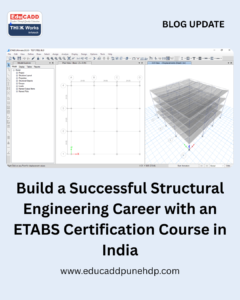
Build Your Future with Advanced Structural Design Skills
Part One: Discover the Power of ETABS in Modern Structural Engineering
ETABS: A Powerful Tool for Building Design and Analysis
ETABS is an advanced structural analysis and design software developed by Computers and Structures, Inc. (CSI). Engineers use it to model, analyze, and design building structures with greater efficiency. The software supports the analysis of multistorey buildings, reinforced concrete structures, steel frameworks, and other building systems. Furthermore, it provides tools for evaluating structural behavior under different loading conditions. Engineers can study how columns, beams, slabs, and other components respond to applied forces. This information helps them make informed design decisions and identify potential structural concerns. An ETABS Certification Course in India introduces learners to these capabilities through guided exercises and practical assignments. Consequently, students can connect classroom concepts with the digital workflows used in structural engineering offices.
Why ETABS Skills Matter in Today’s Construction Industry
Modern construction projects demand precision, efficiency, and reliable structural performance. Engineers must consider dead loads, live loads, wind loads, seismic forces, and other relevant design conditions. Manual calculations remain important, but complex structures often require specialized software for detailed analysis. ETABS helps engineers organize structural models, evaluate results, and perform design checks within a coordinated environment. Therefore, professionals who understand both engineering principles and software applications can contribute more effectively to project teams. In addition, construction companies increasingly value candidates who can interpret analytical results rather than simply operate software commands. An ETABS Certification Course in India helps aspiring engineers develop this balanced skill set. By combining technical understanding with practical experience, learners can prepare for responsibilities in structural design consultancies, construction companies, and infrastructure development organizations.
Who Should Enroll in an ETABS Certification Course?
ETABS training suits civil engineering students, BE and BTech graduates, diploma holders with relevant experience, and practicing structural engineers seeking to improve their software knowledge. Students can use the course to strengthen their understanding of structural systems before entering professional employment. Recent graduates can develop practical skills that complement their academic qualifications. Similarly, working engineers can explore efficient modeling techniques and improve their understanding of structural analysis workflows. Architects and construction professionals may also benefit from learning how structural models support coordination, provided they understand the limits of their professional responsibilities. However, successful structural design requires appropriate engineering qualifications, technical judgment, and compliance with applicable standards. An ETABS Certification Course in India should therefore combine software instruction with fundamental engineering concepts. This approach helps learners build meaningful competence instead of relying solely on automated calculations.
Understanding Structural Modeling from the Ground Up
Structural modeling forms the foundation of effective ETABS work. Before analyzing a building, engineers must understand its geometry, structural layout, materials, and support conditions. During training, learners explore how to define grids, establish storey levels, assign material properties, and create structural elements. They also learn how to represent beams, columns, slabs, walls, and supports within a digital model. Each element must reflect the intended structural system as accurately as possible. For example, incorrect support conditions or unrealistic member dimensions can affect analytical results. Therefore, students must develop careful modeling habits from the beginning. A well-designed ETABS Certification Course in India teaches learners to verify model geometry, review connectivity, and check assumptions before proceeding. These skills help reduce avoidable errors and create a dependable foundation for further structural analysis.
Explore Loads, Load Combinations, and Structural Behavior
Loads influence how a building responds to its environment and intended use. Engineers must identify the applicable loads and determine how they affect structural members. Dead loads generally include the weight of permanent structural and nonstructural components, while live loads represent variable occupancy and usage loads. Wind and earthquake forces may also govern the design of buildings, depending on their location, height, configuration, and applicable requirements. During ETABS training, learners explore how to define load patterns, assign loads, and create appropriate load combinations. They also study how structural responses change under different conditions. Nevertheless, software output alone does not guarantee a safe design. Engineers must verify input assumptions and follow relevant design codes. An ETABS Certification Course in India helps learners understand the relationship between applied loads, structural response, and responsible engineering decisions.
Learn Structural Analysis and Interpret the Results
Structural analysis helps engineers understand how a building responds to different loading conditions. ETABS provides analytical results that may include displacement, storey drift, bending moments, shear forces, axial forces, and support reactions. These results help engineers evaluate the performance of structural components and identify areas requiring further investigation. During practical sessions, students learn to navigate analysis results, inspect diagrams, and compare structural responses across different load cases. They also learn why unusual results require careful examination instead of immediate acceptance. For instance, unexpected displacement may indicate modeling errors, unsuitable stiffness assumptions, or a genuine structural concern. An ETABS Certification Course in India should teach students to interpret these results using engineering principles. As a result, learners develop analytical thinking and become better prepared to communicate structural findings to colleagues and project stakeholders.
Part One Summary: Build a Strong Technical Foundation
Understanding ETABS requires a combination of software familiarity, structural engineering fundamentals, and disciplined problem-solving. Students must learn how to create accurate models, apply appropriate loading conditions, analyze structural behavior, and interpret results. Each stage influences the quality of the final design. Therefore, learners should focus on understanding why they perform each operation rather than memorizing commands. A structured ETABS Certification Course in India provides an opportunity to practise these skills through guided examples and progressively challenging exercises. Furthermore, regular practice helps students become familiar with common modeling challenges and analytical checks. Once learners establish this foundation, they can progress toward structural design workflows and larger building projects. This transition prepares them to apply their knowledge more confidently in academic assignments, training projects, and professional engineering environments.
Part Two: Transform Your ETABS Knowledge into Career Opportunities
Master Reinforced Concrete and Steel Structure Design
Structural design involves selecting suitable member sizes and reinforcement or steel sections to satisfy relevant strength, serviceability, and detailing requirements. ETABS supports design workflows for various building systems, depending on the software version, selected design code, and available features. During training, learners can explore how engineers review beam and column design results, examine design warnings, and assess whether structural members satisfy the required criteria. Reinforced concrete design introduces concepts such as flexural capacity, shear resistance, reinforcement requirements, and member detailing. Steel design focuses on section capacity, stability, and other applicable checks. However, engineers must understand the assumptions and limitations behind software-generated results. An ETABS Certification Course in India can help students develop the knowledge needed to review these outputs critically. This experience supports better design decisions and reinforces the importance of engineering judgment.
Understand Earthquake-Resistant Building Design
Earthquake-resistant design plays an important role in structural engineering, particularly in regions exposed to significant seismic activity. Engineers must consider how buildings respond to lateral forces, how structural systems distribute these forces, and how excessive movement can affect performance. ETABS supports several analysis approaches, subject to the building model, software capabilities, and applicable design requirements. Learners may study response spectrum analysis, modal analysis, storey drift, torsional response, and other relevant concepts. They can also examine how structural configuration influences the behavior of a multistorey building. Nevertheless, seismic design requires careful selection of parameters and compliance with applicable standards. An ETABS Certification Course in India helps learners understand these principles and practise interpreting analytical results. Consequently, students gain a stronger foundation for participating in seismic analysis and structural design under appropriate professional supervision.
Gain Practical Experience Through Realistic Building Projects
Practical assignments help learners translate theoretical concepts into useful engineering skills. A well-structured training program may include modeling a residential building, analyzing a multistorey office structure, or comparing alternative structural configurations. Students can begin with a simple building and gradually introduce additional storeys, structural elements, and loading conditions. They can then review the results, investigate discrepancies, and refine their models. For example, a multistorey residential project can demonstrate how storey height, member dimensions, material properties, and lateral loading influence structural response. Trainers can also encourage learners to document their assumptions and explain their design decisions. An ETABS Certification Course in India becomes more valuable when it includes these practical activities. Moreover, completed assignments can help students demonstrate their understanding during interviews, technical discussions, and entry-level engineering assessments.
Connect ETABS with Other Civil Engineering Software
Structural engineering projects often involve several software applications that support different stages of the design process. Engineers may use AutoCAD for drawings, Revit for building information modeling, and spreadsheets for calculations, documentation, or result verification. ETABS focuses on structural modeling, analysis, and supported design workflows. Other applications may assist with detailed drawings, coordination, or complementary engineering tasks. Understanding how these tools work together helps professionals manage project information more effectively. However, transferring data between applications requires careful checking because model assumptions, element properties, units, and analytical representations may differ. An ETABS Certification Course in India can introduce learners to these broader workflows and explain where coordination matters most. By developing awareness of related tools, students can prepare for multidisciplinary project environments and improve their ability to collaborate with architects, structural engineers, and other construction professionals.
Explore Career Opportunities After ETABS Training
ETABS knowledge can support several career paths within the civil engineering and construction industries. Depending on their qualifications and experience, learners may pursue opportunities as junior structural design engineers, structural analysis trainees, civil design engineers, or engineering project assistants. Some professionals may use ETABS skills to complement their existing roles in construction, consulting, or building design. However, certification alone does not guarantee employment or establish professional competence. Employers also evaluate engineering fundamentals, problem-solving ability, communication, practical experience, and familiarity with relevant standards. Therefore, students should develop a portfolio of well-documented practice projects and strengthen their understanding of structural concepts. An ETABS Certification Course in India can provide a useful starting point for this process. With continued learning and appropriate professional development, learners can work toward more advanced structural engineering responsibilities over time.
Choose the Right ETABS Training Institute in India
Selecting the right training institute can make a significant difference to your learning experience. Before enrolling, examine the course syllabus, trainer qualifications, practical session structure, and opportunities to work on building models. A strong program should cover modeling fundamentals, load assignments, analysis procedures, result interpretation, and relevant design workflows. It should also explain common modeling errors and the importance of checking software output against engineering principles. In addition, ask whether the course includes project assignments, assessment activities, and guidance on preparing for technical interviews. Students should confirm what the certificate represents and whether the provider has any officially recognized accreditation or authorization. An ETABS Certification Course in India should offer transparent course details and realistic learning outcomes. By comparing these factors, you can choose a program that matches your current skills, professional goals, and available study time.
Develop a Long-Term Career in Structural Engineering
Completing an ETABS course is an important milestone, but professional growth depends on continuous learning. Structural engineers must stay informed about relevant building codes, design practices, software updates, and advances in construction technology. They should also strengthen their knowledge of structural mechanics, reinforced concrete, steel design, foundation systems, and earthquake-resistant construction. Working through different building examples can improve analytical confidence and reveal areas that need further study. Furthermore, communication skills matter because engineers must explain calculations, design assumptions, and technical recommendations to project teams. An ETABS Certification Course in India can help establish a practical foundation, while internships, supervised project experience, and further technical education can deepen your expertise. By combining these opportunities with consistent practice, you can build a more competitive professional profile and prepare for the evolving requirements of the engineering industry.
Conclusion: Build Your Future with Advanced Structural Design Skills
Structural engineering offers exciting opportunities for professionals who combine technical knowledge with practical problem-solving skills. As construction projects become increasingly complex, the ability to model, analyze, and evaluate building structures can provide a valuable professional advantage. ETABS supports these activities by bringing important structural analysis and design workflows into one software environment. However, effective use of the software requires a clear understanding of engineering principles, applicable standards, and the limitations of analytical models. Choosing a practical ETABS Certification Course in India can help students and working professionals develop these essential capabilities. Through guided training, realistic projects, and continuous practice, learners can strengthen their technical foundation and prepare for opportunities in structural engineering. Start by evaluating your current skills, selecting a suitable training program, and committing to consistent learning. With dedication and responsible engineering practice, you can take meaningful steps toward a rewarding career in modern structural design.

