
Build the Future with V-Ray Certification in India: Master Visual Design for a New Era
Introduction: Turn Creative Ideas into Powerful Visual Experiences
Modern product design is no longer limited to technical drawings and basic 3D models. Designers, architects, engineers, and visualization professionals now use advanced rendering tools to communicate ideas with greater clarity. V-Ray Certification Course in India can help learners develop practical rendering skills and understand how realistic visuals support modern design workflows. V-Ray helps transform digital models into detailed images with realistic lighting, materials, shadows, reflections, and environments.
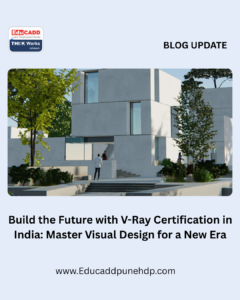
Build the Future with V-Ray
As industries increasingly depend on visual presentations, professionals need more than software knowledge. They need the ability to create visuals that explain design concepts effectively. Therefore, learning V-Ray can complement skills in software such as SketchUp, 3ds Max, Revit, and other design platforms. With structured training, learners can explore rendering techniques and build a portfolio that demonstrates their creative and technical abilities.
Part 1: Build a Strong Foundation for Modern Visualization
Discover the Power Behind Realistic Rendering
Realistic rendering allows a digital model to communicate its intended appearance before production or construction begins. V-Ray provides tools that help users create convincing lighting, textures, reflections, and shadows. As a result, designers can present their concepts in a more understandable way.
For students, this creates an opportunity to move beyond basic modelling. Instead of showing only geometry, they can create complete visual scenes. They can experiment with materials, lighting setups, cameras, and environments. This practical approach also helps learners understand how different visual elements influence the final presentation.
Why V-Ray Skills Matter in Today’s Design Industry
Design industries continue to place strong value on visual communication. A technical drawing may explain dimensions, while a rendered image can demonstrate the intended experience. Consequently, rendering skills can add another useful capability to a designer’s technical profile.
V-Ray can support professionals working with architecture, interiors, product concepts, furniture, and other visualization projects. Designers can create presentations that show how materials and lighting may appear in a finished environment. This makes rendering knowledge useful for both creative communication and professional presentations.
Create More Than Just Basic 3D Models
A 3D model provides the foundation of a visual scene. However, realistic presentation requires additional elements. Materials define surfaces, lighting establishes atmosphere, and cameras determine how viewers experience the scene. V-Ray brings these components together through a professional rendering workflow.
Learners can practise creating different materials and testing lighting conditions. They can also explore camera composition and scene preparation. Over time, these exercises help students develop greater control over their final visuals. Moreover, repeated practice encourages creative experimentation while strengthening technical understanding.
Learn Lighting Techniques for Professional Results
Lighting plays a major role in realistic visualization. Even a detailed model can appear flat when lighting is poorly planned. V-Ray provides options for experimenting with natural and artificial lighting, allowing learners to understand how light affects materials, shadows, depth, and mood.
Students can practise daylight scenes, interior lighting, evening environments, and focused presentation shots. Each exercise provides a different challenge. Therefore, learners gradually develop an understanding of how lighting choices can change the appearance of a design.
Explore Materials, Textures, and Surface Details
Materials give digital objects their visual identity. Glass, wood, metal, concrete, fabric, and polished surfaces each respond differently to light. Learning how to represent these characteristics can make a major difference in a rendered scene.
A structured V-Ray Certification Course in India can introduce learners to material creation and texture workflows. They can experiment with surface properties and observe how small adjustments influence realism. This process also helps students become more attentive to design details.
Improve Composition and Visual Storytelling
A successful render should communicate an idea clearly. Composition determines where viewers look first and how they understand the scene. Camera position, focal length, framing, and perspective can all influence the final presentation.
Learners can develop these skills through practical projects. For example, an architectural interior may require a wide composition, while a product render may benefit from a focused view. By testing different approaches, students learn how to present their designs with greater visual impact.
Build Practical Skills Through Project-Based Learning
Software training becomes more valuable when students apply concepts to realistic projects. Instead of memorising commands, learners can work through complete visualization tasks. A project may begin with a model and continue through material setup, lighting, camera placement, rendering, and final presentation.
This approach helps connect individual techniques into a complete workflow. It also gives students work they can review and improve. Furthermore, project-based learning can help identify areas that require additional practice.
Part 2: Transform V-Ray Knowledge into Career-Ready Skills
Connect V-Ray with Other Design Software
V-Ray rarely works in isolation within a professional workflow. Designers may create models using platforms such as SketchUp, 3ds Max, or Revit and then use rendering tools to produce presentation-quality visuals. Understanding this connection can make the overall design process more efficient.
Learners who already understand 3D modelling can therefore extend their skills into visualization. They can import or prepare models, assign materials, establish lighting, adjust cameras, and produce final renders. This combination creates a broader technical skill set.
Develop a Portfolio That Shows Your Ability
A strong portfolio can demonstrate practical knowledge more effectively than a list of software names. Students can include interior scenes, architectural exteriors, product concepts, material studies, and lighting experiments. Each project can highlight a different rendering skill.
Portfolio development also encourages learners to review their own work critically. They can compare early renders with later projects and identify improvements. As their understanding grows, they can create more refined and visually consistent presentations.
Prepare for Different Visualization Opportunities
V-Ray skills can complement several design-related career paths. Depending on their existing education and interests, learners may explore opportunities in architectural visualization, interior visualization, product presentation, 3D rendering, or design support.
However, software knowledge alone does not define a career. Employers may also look for modelling ability, design fundamentals, communication skills, creativity, project experience, and portfolio quality. Therefore, learners should develop V-Ray alongside relevant design and technical skills.
Understand the Value of Industry-Oriented Training
Effective training should focus on practical application rather than only theoretical explanations. Students benefit when instructors explain workflows and then provide opportunities to practise them. Regular exercises can help learners become comfortable with rendering settings and problem-solving.
An industry-oriented course can also introduce common project requirements, presentation standards, and workflow practices. As a result, students can gain a clearer understanding of how rendering skills fit into real design projects.
Stay Current with Visualization Techniques
Digital visualization continues to evolve. Rendering workflows now focus heavily on realism, speed, efficient scene management, and better presentation. Professionals must therefore continue learning after completing a course.
A certification can provide a structured starting point, but consistent practice remains important. Learners can explore new rendering techniques, study professional references, and improve their existing projects. This continuous learning mindset can help them keep their skills relevant.
Turn Creative Thinking into Technical Expertise
One of the most valuable aspects of rendering is the connection between creativity and technology. A designer needs technical knowledge to build and render a scene, but creative thinking determines how that scene communicates an idea.
V-Ray training can encourage learners to experiment with atmosphere, composition, materials, lighting, and presentation. With practice, technical controls become tools for creative expression. This balance can help designers produce visuals that are both accurate and engaging.
Take the Next Step with V-Ray Certification
Choosing a V-Ray Certification Course in India can be a practical step for learners who want to strengthen their 3D visualization capabilities. The right training can introduce rendering fundamentals, materials, lighting, cameras, scene preparation, and project workflows in a structured manner.
Students should focus on hands-on practice and portfolio development throughout their learning journey. Combining V-Ray with complementary software and strong design fundamentals can further expand their capabilities. Most importantly, learners should treat certification as part of a broader professional development journey rather than as the final destination.
Conclusion: Shape Ideas into Visuals That Speak
The future of design depends not only on creating accurate models but also on communicating those models effectively. V-Ray provides a powerful environment for exploring realistic rendering, lighting, materials, composition, and visual presentation. With consistent practice, learners can transform basic 3D models into compelling design experiences.
A V-Ray Certification Course in India can help students build structured knowledge and practical visualization skills. Whether the goal is architectural visualization, interior presentation, product rendering, or broader 3D design, these capabilities can complement an existing technical background. By combining certification, project practice, portfolio development, and continuous learning, aspiring designers can prepare themselves for the evolving world of modern digital visualization.

