
Build Stunning Visual Worlds with a V-Ray Certification Course in India: From 3D Design to Photorealistic Rendering
Introduction: Turn Your Creative Vision into Photorealistic Reality
The world of architecture, interior design, and product visualization continues to evolve with advanced 3D design technologies. Today, clients expect more than basic drawings and simple models. They want realistic images that showcase materials, lighting, textures, colours, and fine details before a project becomes reality. This is where V-Ray plays an important role. A V-Ray Certification Course in India can help aspiring designers, architects, engineering graduates, and creative professionals develop the rendering skills they need to create impressive visual presentations. Moreover, learning V-Ray helps students transform ordinary 3D models into realistic images that communicate ideas clearly. With practical training, creative thinking, and consistent practice, learners can strengthen their portfolios and prepare for opportunities in architecture, interior design, product design, and visualization.
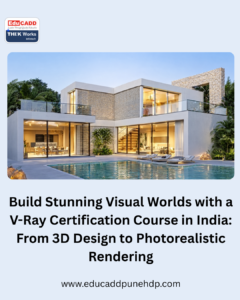
Turn Your Creative Vision into Photorealistic Reality
Part One: Discover the Power of V-Ray and Professional Rendering
V-Ray: A Powerful Tool for Modern 3D Visualization
V-Ray is a professional rendering engine that helps designers produce realistic images from three-dimensional models. It works with supported design applications to create detailed visuals for architectural spaces, interior environments, products, and other creative projects. For example, an interior designer can use V-Ray to present a living room with natural sunlight, wooden flooring, realistic furniture, and carefully selected lighting. Similarly, an architect can show how a building might look with different exterior materials and landscape elements. V-Ray helps users communicate design ideas before construction begins. As a result, clients can understand proposed designs more easily and make informed decisions. Learning this technology also introduces students to professional rendering workflows used across several design industries.
Why Choose a V-Ray Certification Course in India?
India offers opportunities for people interested in architecture, interior design, digital visualization, and product presentation. However, technical knowledge alone may not always meet the expectations of design employers. Professionals also need to present their ideas through clear, attractive, and realistic visuals. A V-Ray Certification Course in India can help learners develop these valuable skills through structured lessons and practical exercises. Furthermore, a well-designed course introduces important rendering concepts while allowing students to practise with actual design projects. Learners can understand material creation, lighting setup, camera positioning, and image output. They can also build confidence by improving their work through feedback and repeated practice. Therefore, V-Ray training can become a valuable addition to an existing design qualification.
Explore the Essential Features of V-Ray
V-Ray provides several features that support detailed and realistic rendering. These include physically based materials, advanced lighting tools, reflection and refraction controls, camera settings, and rendering options. Each feature contributes to the final appearance of a scene. For instance, reflective materials help designers create realistic glass surfaces, polished furniture, and metallic objects. Meanwhile, suitable lighting can make a small room feel warm and comfortable or give a commercial interior a bright, professional atmosphere. V-Ray also supports workflows that help users balance image quality and rendering performance. During training, students can explore these features step by step. Consequently, they gain a better understanding of how technical settings influence the final image.
Master Realistic Materials, Textures, and Lighting
Materials, textures, and lighting are essential elements of professional visualization. Even a carefully modelled space can appear unrealistic when its surfaces lack detail or its lighting feels unnatural. V-Ray allows designers to adjust material properties such as roughness, reflection, transparency, and colour. For example, a marble countertop needs different surface characteristics from a fabric sofa or a wooden cabinet. Similarly, daylight entering through a window creates a different atmosphere from warm artificial lighting. A V-Ray certification course should help students understand these differences through practical exercises. By testing different combinations, learners can create balanced scenes with greater depth and realism. In addition, they learn to avoid excessive reflections, unnatural shadows, and inconsistent colours.
Develop Your Skills in Architectural Visualization
Architectural visualization helps architects and designers present building concepts in a realistic and understandable format. V-Ray supports this process by turning architectural models into detailed images of exterior and interior spaces. Students can practise rendering residential buildings, commercial complexes, offices, and landscape designs. For example, they might prepare an exterior view showing sunlight, vegetation, paving, glass windows, and façade materials. They can also explore different times of day to understand how lighting affects the overall appearance. Furthermore, realistic architectural images help clients evaluate design choices before construction starts. By learning professional rendering techniques, students can improve their presentation skills and create portfolio projects that demonstrate their understanding of architectural design.
Create Attractive Interior Design Presentations
Interior designers often need to communicate their ideas to clients who may find technical drawings difficult to understand. Realistic renderings make this process easier because they show how furniture, colours, materials, and lighting work together. V-Ray helps designers create convincing visual presentations for bedrooms, kitchens, living rooms, offices, hotels, and retail spaces. For instance, a designer can compare different wall finishes or furniture arrangements by rendering multiple design options. As a result, clients can visualise the proposed space and provide feedback before purchasing materials or starting installation. During a V-Ray Certification Course in India, learners can practise interior rendering techniques and improve their attention to detail. These skills can support both independent design projects and professional studio work.
Understand the Complete 3D Rendering Workflow
Professional rendering involves several connected stages, from preparing a model to producing the final image. First, designers check the model for missing elements and incorrect geometry. Next, they assign materials, position cameras, and configure lighting. After that, they adjust rendering settings and generate test images to identify problems. Finally, they refine the scene and produce the finished visual. Understanding this workflow helps students work systematically instead of changing settings randomly. Moreover, test renders allow designers to identify lighting issues and material problems before spending time on high-quality output. A structured learning process helps learners understand how each stage affects the final result. With practice, they can improve both their image quality and their overall efficiency.
Part Two: Transform Your Rendering Knowledge into Career Opportunities
Build a Strong Portfolio with Practical Projects
A professional portfolio demonstrates what a designer can achieve with the skills they have learned. For this reason, students should focus on creating original projects during their V-Ray training. They can develop an interior room scene, an architectural exterior, a product presentation, or a commercial space. Each project should demonstrate effective lighting, realistic materials, thoughtful camera placement, and attention to detail. Furthermore, learners can include different views of the same project to show their versatility. A strong portfolio should also explain the design objective and the techniques used to achieve the result. Instead of collecting many unfinished images, students should select their best work. This approach helps them present their abilities more confidently to potential employers and clients.
Explore Career Opportunities After V-Ray Training
V-Ray skills can complement several design-related career paths. Depending on their qualifications, experience, and portfolio quality, learners may pursue roles such as 3D visualizer, architectural renderer, interior visualization artist, or 3D design assistant. Some professionals also use rendering skills in product presentation, exhibition design, and real estate marketing. However, career opportunities depend on more than software knowledge. Employers may also expect candidates to understand design principles, modelling tools, project requirements, and communication practices. Therefore, students should combine V-Ray training with relevant design education and practical experience. They should also research job descriptions in their preferred field. By identifying the skills employers require, learners can plan their training more effectively and prepare for suitable opportunities.
Learn Industry-Relevant Skills Through Practical Training
Practical learning helps students understand how rendering techniques apply to real design situations. Instead of relying entirely on theory, learners should practise creating scenes, testing materials, adjusting lighting, and solving rendering problems. For example, an instructor might ask students to render the same room under daylight and evening conditions. This exercise helps them understand how light direction, colour temperature, and exposure affect the final image. Similarly, rendering different materials teaches students how surface properties influence realism. A good V-Ray Certification Course in India should provide guided exercises, project-based learning, and opportunities to review mistakes. In addition, learners benefit from feedback that identifies areas for improvement. Regular practice gradually builds technical confidence and encourages independent problem-solving.
Combine V-Ray with Other Design Software
V-Ray becomes especially useful when learners understand how it fits into a broader design workflow. Architects and interior designers may combine it with tools such as SketchUp, 3ds Max, or other supported modelling applications. Each application serves a different purpose, depending on the project and workflow. Modelling software helps users develop the geometry, while V-Ray creates realistic rendered images from supported scenes. Consequently, knowledge of both modelling and rendering can help designers produce complete presentations. Students should also learn basic image composition, colour balance, and presentation techniques. These additional skills improve the quality of their work and help them communicate design decisions more effectively. By developing a combination of technical and creative abilities, learners can become more versatile design professionals.
Improve Your Speed, Accuracy, and Creative Confidence
Rendering high-quality images requires patience, experimentation, and careful planning. Beginners may initially struggle with slow render times, incorrect lighting, noisy images, or unrealistic materials. However, these challenges become easier to manage with consistent practice. Students can improve performance by selecting suitable render settings, optimising scene complexity, and testing low-resolution images before producing final outputs. They should also develop a habit of reviewing every render critically. Ask questions such as whether the lighting looks natural, whether the materials match their real-world appearance, and whether the image communicates the design clearly. Over time, this process improves technical accuracy and creative judgement. Most importantly, students learn to approach rendering problems methodically rather than relying on guesswork.
Choose the Right V-Ray Training Institute
Selecting a suitable training institute is an important step towards developing professional rendering skills. Before enrolling, students should review the course syllabus, trainer experience, practical project requirements, software coverage, and learning support. They should also ask whether the course includes portfolio development and guidance on applying rendering skills to industry projects. For learners in Pune, EDUCADD Hadapsar is an option to explore for design and software training. Prospective students should contact the institute to confirm the current V-Ray course availability, syllabus, training format, fees, and certification details. Additionally, learners should check whether the course matches their existing experience and career goals. Choosing training that balances technical instruction with practical work can make the learning experience more productive.
Stay Updated with Modern Rendering Trends
The visualization industry continues to develop as hardware, rendering software, and creative workflows improve. Designers increasingly focus on realistic lighting, detailed materials, efficient production methods, and clear visual storytelling. Therefore, completing a course should mark the beginning of continued learning rather than the end. Students can improve their skills by practising regularly, exploring updated software features, reviewing professional portfolios, and experimenting with new rendering techniques. They should also learn to respond constructively to client feedback and changing project requirements. In addition, keeping organised records of completed projects makes it easier to track progress and identify strengths. A commitment to continuous improvement helps designers maintain relevant skills and adapt to changing expectations in the visualization industry.
Conclusion: Shape Your Design Future with V-Ray Expertise
A career in design visualization requires a combination of technical knowledge, creative thinking, and the ability to communicate ideas effectively. V-Ray helps designers transform three-dimensional models into realistic images that allow clients to understand and evaluate proposed designs. From architectural exteriors and interior spaces to product presentations, its rendering capabilities support a wide range of creative applications. A V-Ray Certification Course in India can provide a structured starting point for learners who want to strengthen their rendering abilities and develop a professional portfolio. However, success depends on consistent practice, a solid understanding of design fundamentals, and a willingness to learn new techniques. Explore suitable training options, work on practical projects, and continue refining your skills. With dedication and the right learning approach, you can turn your creative ideas into compelling visual experiences and take meaningful steps towards your design career.

