
Transform Spaces, Inspire Living: Build Your Creative Future with an Interior Designing Certificate Course
Introduction
Interior design is more than decorating a room. It is the art of transforming ordinary spaces into beautiful, comfortable, and functional environments. Today, homes, offices, hotels, restaurants, shopping malls, and commercial buildings demand creative interior designers. As a result, the interior design industry offers exciting career opportunities for students and aspiring professionals. However, creativity alone cannot build a successful career. You also need technical knowledge, design skills, software expertise, and practical experience. An Interior Designing Certificate Course helps you develop these essential abilities and prepare for real-world projects. Moreover, professional training introduces you to modern design techniques, space planning, material selection, lighting concepts, and 3D visualization. Whether you are a beginner or an architecture graduate, the right training can help you turn your passion into a profession.
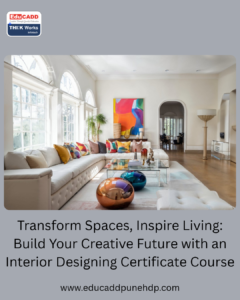
Interior Designing Certificate Course – Build Your Creative Career
Part 1: Discover the World of Interior Design
Understanding the Importance of Interior Design
Interior design plays an important role in creating spaces that improve people’s lifestyles. A well-designed environment offers comfort, functionality, and visual appeal. For example, residential interiors require thoughtful furniture arrangements, suitable lighting, and efficient space utilization. Similarly, commercial interiors need professional layouts that support productivity and customer experiences. Therefore, interior designers must understand both aesthetics and practical requirements. They study how people use different spaces and develop designs that meet their expectations. An Interior Designing Certificate Course introduces students to these essential concepts. Furthermore, it helps learners understand how creativity, technical knowledge, and planning work together to create successful interiors.
Why Choose an Interior Designing Certificate Course?
Choosing professional training is an important step towards building a career in interior design. A structured course helps students understand industry practices and develop essential design skills. Instead of learning random techniques, students follow a systematic learning process. They explore space planning, furniture design, colour combinations, lighting arrangements, and material applications. Additionally, practical assignments help them understand real project requirements. An Interior Designing Certificate Course also introduces professional design software used by architecture and interior design companies. Consequently, students gain confidence in presenting their ideas and handling design assignments. This combination of theoretical knowledge and practical exposure creates a strong foundation for future opportunities.
Essential Skills Every Interior Designer Needs
A successful interior designer combines creativity with technical expertise. First, observation skills help designers understand existing spaces and identify improvement opportunities. Next, creative thinking allows them to develop unique concepts that match client requirements. Communication skills also play an important role because designers regularly interact with clients, architects, contractors, and suppliers. In addition, problem-solving abilities help them manage space limitations and project challenges. Technical drawing knowledge supports accurate design development. Moreover, time management helps professionals complete projects within deadlines. An Interior Designing Certificate Course helps learners develop these abilities through guided exercises, design assignments, and practical demonstrations.
Mastering Space Planning and Layout Design
Space planning is one of the most important elements of interior design. It involves organizing furniture, equipment, circulation areas, and functional zones within a given space. A good layout ensures that people can move comfortably without unnecessary obstacles. For residential projects, designers consider bedrooms, kitchens, living rooms, and storage requirements. Meanwhile, commercial projects require layouts that support business operations and customer movement. Designers also study measurements, proportions, ergonomics, and furniture dimensions. Furthermore, they prepare floor plans to communicate their ideas accurately. During an Interior Designing Certificate Course, students learn how to develop functional layouts that balance comfort, appearance, and available space.
Exploring Colour Theory, Lighting, and Materials
Colours, lighting, and materials influence the overall appearance of an interior space. Colour theory helps designers select combinations that create specific moods and visual effects. For example, lighter shades can make smaller rooms feel more spacious. On the other hand, darker tones can introduce depth and sophistication. Lighting also affects the atmosphere and functionality of a room. Designers combine natural lighting, ambient lighting, task lighting, and accent lighting to achieve suitable results. Material selection requires attention to durability, maintenance, texture, and budget. Therefore, professional training introduces learners to these important design principles and helps them make informed decisions.
Understanding Furniture Design and Interior Styling
Furniture plays a major role in determining the comfort and functionality of any interior. Designers must select furniture according to room dimensions, user requirements, and design themes. They also consider materials, finishes, proportions, and ergonomics. For example, modular furniture works well in compact apartments because it supports efficient space utilization. Similarly, customized storage solutions help maintain organized environments. Interior styling adds the finishing touch through decorative accessories, artwork, fabrics, plants, and lighting elements. However, designers must maintain visual balance rather than overcrowding a room. An Interior Designing Certificate Course helps students understand these concepts and develop attractive, practical interior solutions.
The Role of CAD and 3D Visualization Software
Modern interior design depends heavily on digital tools. Designers use computer-aided design software to prepare accurate floor plans, elevations, furniture layouts, and working drawings. AutoCAD is widely used for technical drafting and detailed documentation. Meanwhile, SketchUp helps designers create three-dimensional models of interior spaces. Tools such as 3ds Max and V-Ray support advanced visualization and realistic rendering. These applications help clients understand design concepts before construction begins. Additionally, digital presentations improve communication between designers and project teams. Therefore, learning professional software is an important part of an Interior Designing Certificate Course, especially for students who want to work in modern design studios.
Part 2: Turn Your Creativity into a Professional Career
Learning Practical Interior Design Through Projects
Practical training helps students understand how interior design works beyond classroom concepts. During project-based learning, students develop layouts, select materials, prepare furniture arrangements, and create 3D models. These activities introduce them to real design challenges. For example, designing a compact apartment requires careful planning to maximize storage and usable space. Similarly, an office project requires attention to employee comfort, lighting, and movement. Students also learn how to present their concepts through drawings and visualizations. An Interior Designing Certificate Course that includes practical assignments helps learners develop confidence and prepare for professional responsibilities.
Understanding Residential and Commercial Interior Design
Interior designers work across different sectors, and each sector has unique requirements. Residential design focuses on creating comfortable and personalized homes. It includes apartments, villas, kitchens, bedrooms, living rooms, and bathrooms. Commercial interior design covers offices, retail stores, restaurants, hotels, hospitals, and educational institutions. These projects require careful consideration of functionality, branding, customer experience, and safety. Moreover, designers must understand the purpose of each environment before developing a concept. Learning both residential and commercial design gives students broader industry knowledge. It also helps them identify the type of projects they want to pursue professionally.
Career Opportunities After Completing the Course
Professional interior design training can open several career opportunities. Students can explore different roles depending on their interests, technical knowledge, and practical skills. Some graduates work with established design firms, while others join architecture companies or construction organizations. Experienced professionals may also establish independent design studios.
Popular career options include:
-
Interior Designer: Creates functional and attractive interior spaces.
-
Interior Design Assistant: Supports senior designers with drawings and project documentation.
-
CAD Designer: Prepares technical drawings and detailed layouts.
-
3D Visualizer: Develops realistic interior models and rendered presentations.
-
Furniture Designer: Designs customized furniture and storage solutions.
-
Kitchen Designer: Plans modern kitchens with efficient layouts.
-
Space Planner: Organizes residential and commercial spaces.
-
Freelance Interior Consultant: Provides independent design services.
Therefore, an Interior Designing Certificate Course can become a valuable starting point for students who want to enter this creative industry.
Building a Professional Interior Design Portfolio
A portfolio is one of the most important tools for an aspiring interior designer. It demonstrates your creativity, technical knowledge, and ability to develop practical solutions. A strong portfolio should include floor plans, furniture layouts, elevations, 3D models, rendered images, and completed project assignments. Additionally, include short explanations about the design concept, materials, colours, and planning decisions. This helps employers understand your design approach. Students should focus on presenting their best projects rather than adding too many unrelated examples. A professional portfolio also supports freelance opportunities and client presentations. Consequently, portfolio development should remain an important part of professional interior design training.
Who Can Join an Interior Designing Certificate Course?
Interior design training welcomes students from different educational backgrounds. Students who have completed their 10th or 12th standard can explore suitable beginner-level programs. Architecture students, civil engineering students, diploma holders, and graduates can also develop additional design skills. Furthermore, working professionals who want to change their career direction can learn interior design techniques. People with an interest in home decoration, furniture planning, and creative visualization may also find this field exciting. Previous software experience is helpful but not always necessary for beginners. A structured Interior Designing Certificate Course can introduce fundamental concepts before progressing towards advanced design applications.
The Importance of Industry-Oriented Training
The interior design industry continues to adopt modern technologies, innovative materials, and advanced visualization techniques. Therefore, students need training that reflects current professional practices. Industry-oriented education connects design concepts with practical project requirements. It introduces learners to technical drawings, software applications, material specifications, and project presentations. Additionally, experienced trainers can explain common workplace challenges and industry expectations. Students benefit from practical assignments because they learn how to apply their knowledge independently. Exposure to professional workflows also improves their confidence during interviews. Thus, selecting a training institute with practical learning opportunities can make a significant difference in career preparation.
How to Choose the Right Interior Design Training Institute
Selecting the right institute requires careful consideration. First, check whether the course covers essential subjects such as space planning, colour theory, lighting, furniture design, and technical drafting. Next, review the software applications included in the curriculum. Practical projects should form an important part of the learning process. Also, understand the trainers’ experience and the availability of individual guidance. Students should review the course structure, learning duration, certification details, and placement assistance. Additionally, ask whether the institute provides portfolio development support. These factors help you choose a program that matches your career goals. A good Interior Designing Certificate Course should focus on developing both creative abilities and professional technical skills.
Start Your Interior Design Journey with EduCADD Hadapsar Pune
Choosing the right learning environment can help you take the first step towards a successful design career. EduCADD Hadapsar Pune provides professional training opportunities for students interested in developing technical and creative skills. Through software-oriented learning and practical design exercises, students can explore modern design workflows. Learning applications such as AutoCAD, SketchUp, and 3ds Max can help aspiring designers prepare drawings, develop 3D models, and present interior concepts effectively. Moreover, structured guidance helps students understand how different software applications support professional interior projects. If you want to transform your creativity into technical expertise, explore the available interior design training programs at EduCADD Hadapsar.
Conclusion: Design Your Dreams, Create Your Future
Interior design offers an exciting opportunity to combine creativity, technology, and professional problem-solving. From planning comfortable homes to designing impressive commercial environments, interior designers influence how people experience different spaces. However, building a successful career requires more than creative ideas. You need technical drawing skills, software knowledge, practical experience, and a professional portfolio. An Interior Designing Certificate Course helps you develop these essential abilities and understand modern industry requirements. Furthermore, learning tools such as AutoCAD, SketchUp, and 3ds Max can strengthen your professional capabilities. Whether you want to join a design company, work as a freelancer, or establish your own studio, the right training can help you move forward. Start learning today and turn your passion for beautiful spaces into a rewarding professional journey with EduCADD Hadapsar Pune

