
Master Project Planning with a Primavera P6 Certification Course: From Scheduling Fundamentals to Professional Success
In today’s fast-moving construction and engineering industries, successful project management requires more than technical knowledge. Professionals must plan activities, manage resources, monitor deadlines, and control project costs. Therefore, companies increasingly value individuals who understand modern project planning tools. A Primavera P6 Certification Course helps students and working professionals develop these essential skills and prepare for project planning opportunities across multiple industries. From construction sites to infrastructure projects, Primavera P6 supports better scheduling, coordination, and decision-making. With practical training and industry-focused knowledge, learners can build a strong foundation for a rewarding career in project management.
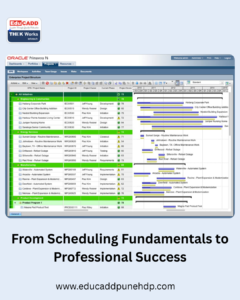
From Scheduling Fundamentals to Professional Success
Part 1: Discover the Power of Primavera P6
Understanding Primavera P6 and Its Importance in Project Management
Primavera P6 is a professional project planning and scheduling software developed by Oracle. It helps project managers organize complex projects, track activities, allocate resources, and monitor progress. Moreover, it allows teams to understand how individual tasks connect with overall project objectives. For example, a construction project may include excavation, foundation work, structural construction, electrical installation, and finishing. Each activity requires proper timing and coordination. Primavera P6 helps planners organize these activities into a logical schedule. As a result, teams can identify delays, manage dependencies, and improve project performance. A Primavera P6 Certification Course introduces learners to these essential concepts and explains how professionals use the software in real-world projects.
Why Primavera P6 Skills Matter in Modern Industries
Large projects often involve multiple teams, contractors, suppliers, and deadlines. Without an organized schedule, even a well-funded project can experience delays and cost overruns. Therefore, companies need professionals who can develop realistic project plans and monitor progress effectively. Primavera P6 helps project teams create detailed schedules, identify critical activities, and evaluate potential risks. Furthermore, the software supports projects that contain thousands of activities and multiple work schedules. Industries such as construction, oil and gas, manufacturing, power generation, and infrastructure development use advanced planning methods to coordinate their operations. By completing a Primavera P6 Certification Course, learners can understand these planning requirements and strengthen their professional profiles. However, career success also depends on practical ability, communication, experience, and knowledge of project management principles.
Who Should Learn Primavera P6?
Primavera P6 offers valuable learning opportunities for civil engineers, mechanical engineers, electrical engineers, project coordinators, planning engineers, and construction professionals. Fresh graduates can also learn the software to explore entry-level planning and scheduling roles. Similarly, experienced engineers may use Primavera P6 to expand their responsibilities and improve project coordination skills. For example, a civil engineer who understands construction activities can learn to convert a project execution plan into a structured schedule. A mechanical engineer working on industrial installations can use scheduling concepts to coordinate equipment delivery, installation, inspection, and commissioning. Although engineering knowledge provides a useful advantage, learners from different professional backgrounds can benefit from structured training. A suitable Primavera P6 Certification Course should therefore combine software instruction with practical project examples.
Essential Features You Will Learn in Primavera P6
Primavera P6 includes several tools that help professionals manage project schedules. These features include project calendars, Work Breakdown Structure (WBS), activity creation, relationships, constraints, baselines, resource assignments, and progress tracking. First, the planner defines the project structure and divides the overall scope into manageable sections. Next, the planner creates activities and establishes logical relationships between them. After that, the planner assigns durations, calendars, and other scheduling details. The software then calculates dates according to the schedule logic and available information. In addition, users can compare actual progress with the original plan and identify activities that require attention. Through a Primavera P6 Certification Course, learners can practise these features step by step and understand how they support effective project control.
Understanding Work Breakdown Structure and Project Activities
A Work Breakdown Structure, commonly known as WBS, divides a large project into smaller and more manageable components. This structure helps teams organize the project scope and assign responsibilities. For example, a residential construction project may contain sections for site preparation, foundations, structural work, electrical systems, plumbing, and finishing. Each section can include several activities with defined durations and relationships. After creating the WBS, planners enter activities and connect them using logical dependencies. These relationships explain which activities must finish or start before others can proceed. Consequently, the project schedule becomes easier to understand and manage. A Primavera P6 Certification Course helps learners practise WBS creation and activity planning, allowing them to build organized schedules that reflect realistic project requirements.
Critical Path Method and Schedule Analysis
The Critical Path Method (CPM) is one of the most important concepts in project scheduling. It identifies the sequence of activities that determines the project’s earliest possible completion date, based on the schedule logic and assumptions. If an activity on the critical path experiences a delay, the entire project may also finish late unless the team takes corrective action. However, not every delayed activity affects the final completion date because some activities have available float. Primavera P6 helps planners analyse activity relationships, calculate schedule dates, and identify critical activities. Furthermore, learners can examine how changing activity durations affects the overall schedule. During a Primavera P6 Certification Course, practical exercises help students understand critical path analysis and use it to support informed planning decisions.
Building Your First Project Schedule
Creating a project schedule involves more than entering activity names and dates. First, the planner reviews the project scope, drawings, contractual requirements, and execution strategy. Next, the planner develops the WBS, defines activities, estimates durations, and establishes dependencies. The planner then assigns suitable calendars and checks the schedule for logical errors. Once the initial schedule is ready, the team reviews the planned sequence and confirms whether it matches the project’s requirements. After approval, the planner can establish a baseline for future performance comparisons. A Primavera P6 Certification Course should provide hands-on practice with these steps. By working on a sample construction or engineering project, learners can understand how to develop a practical schedule instead of simply memorizing software commands.
Part 2: Develop Industry-Ready Project Planning Skills
Resource Management and Workload Planning
Project success depends on the effective use of people, equipment, materials, and time. If several activities require the same resources simultaneously, the project may face workload conflicts or delays. Primavera P6 helps planners assign resources to activities and examine resource requirements across the schedule. For example, a construction project may need the same crane for multiple lifting operations. The planner must coordinate those activities to avoid scheduling conflicts. Similarly, assigning appropriate teams to electrical installation, structural work, and finishing can improve coordination. Nevertheless, software calculations cannot replace realistic productivity estimates or sound management decisions. A Primavera P6 Certification Course introduces resource-related concepts and helps learners understand how resource assignments influence project planning and execution.
Baselines, Progress Tracking, and Project Control
A baseline represents an approved version of a project schedule that teams use as a reference for measuring performance. Once work begins, planners update the schedule with actual start dates, actual finish dates, remaining durations, and progress information. They can then compare current performance with the baseline to identify delays and deviations. For instance, if a foundation activity takes longer than planned, the planner can review its impact on subsequent structural activities. The project team can then consider suitable corrective measures, such as adjusting resources or revising work sequences. Accurate updates are essential because unreliable information produces misleading reports. Through a Primavera P6 Certification Course, learners can practise schedule updates, baseline comparisons, and progress analysis to understand the responsibilities of a planning professional.
Primavera P6 Applications Across Different Industries
Primavera P6 supports project planning across several sectors. In construction, professionals use it to coordinate excavation, concrete work, structural activities, and finishing operations. In infrastructure development, planners schedule highways, bridges, railways, and large public projects. In the oil and gas industry, project teams coordinate engineering, procurement, fabrication, installation, and commissioning. Similarly, power generation projects require careful planning for equipment delivery, installation, testing, and start-up. Manufacturing organizations can also apply project scheduling techniques to plant expansion and equipment upgrades. Although each industry follows different technical requirements, the fundamental principles of activity sequencing, resource planning, and progress monitoring remain important. A Primavera P6 Certification Course can help learners understand these principles and apply them to projects relevant to their career interests.
Career Opportunities After Primavera P6 Training
Learning Primavera P6 can help professionals explore roles such as planning engineer, project scheduler, project coordinator, project controls engineer, and scheduling analyst. Some experienced professionals also use these skills in project management and construction management positions. However, job titles and eligibility requirements vary according to the employer, industry, and project complexity. Employers may expect candidates to understand engineering drawings, construction methods, scheduling principles, reporting, and project documentation in addition to software operation. Therefore, learners should develop both technical and communication skills. A Primavera P6 Certification Course can provide a useful starting point, especially when it includes practical scheduling exercises and project-based assignments. Candidates can further strengthen their profiles by building sample schedules, preparing clear reports, and learning how to explain scheduling decisions during interviews.
How to Choose the Right Primavera P6 Certification Course
Choosing suitable training requires careful consideration of the syllabus, teaching approach, practical sessions, and instructor experience. First, check whether the course covers WBS creation, activity relationships, calendars, critical path analysis, baselines, resources, and progress updates. Next, confirm that learners receive opportunities to create and update schedules using realistic project scenarios. In addition, ask whether the training includes reporting, schedule review, and interview preparation. Beginners should look for clear explanations, guided exercises, and opportunities to resolve doubts. Working professionals may prefer training that focuses on advanced scheduling and project controls. Before enrolling, review the course duration, software access, certification details, and placement support terms. A well-structured Primavera P6 Certification Course should help learners build practical competence rather than focus only on completing lessons.
Practical Projects and Continuous Skill Development
Practical experience makes software training more meaningful. Therefore, learners should practise by creating schedules for projects such as residential buildings, commercial complexes, road construction, or industrial installations. Start by preparing the WBS and listing activities. Then estimate durations, establish dependencies, assign calendars, and calculate the schedule. After creating the baseline, update progress using a sample reporting date and analyse any delays. Additionally, practise generating reports that communicate important milestones, critical activities, and schedule variations. Learners can also improve their understanding by reviewing construction sequences and discussing planning scenarios with experienced professionals. A Primavera P6 Certification Course that includes these exercises can help students connect software knowledge with practical project requirements. Regular practice will further improve accuracy, confidence, and problem-solving ability.
The Future of Project Planning and Scheduling
Project planning continues to evolve as organizations adopt digital workflows, advanced reporting tools, and integrated project management systems. Planning professionals increasingly need to communicate information clearly, coordinate multidisciplinary teams, and interpret schedule data. Consequently, Primavera P6 knowledge can complement skills in project controls, risk management, cost management, and digital construction processes. Professionals who understand both project execution and scheduling can contribute more effectively to planning discussions and progress reviews. However, technology alone does not guarantee project success. Teams still need realistic assumptions, reliable data, effective communication, and timely decisions. By developing a strong foundation through a Primavera P6 Certification Course, learners can prepare to adapt to changing industry expectations and continue building their expertise throughout their careers.
Conclusion: Turn Your Project Planning Ambitions into Career Opportunities
Project planning plays a vital role in delivering engineering and construction projects safely, efficiently, and on time. Primavera P6 helps professionals organize activities, analyse dependencies, manage resources, monitor progress, and identify potential delays. Therefore, learning this software can be a valuable step for engineering graduates, planning professionals, and individuals seeking to expand their project management skills. The right training combines software knowledge with practical exercises, realistic schedules, and an understanding of industry requirements. By choosing a suitable Primavera P6 Certification Course, practising consistently, and developing strong communication skills, you can improve your readiness for project planning opportunities. Start building your scheduling knowledge today and take a confident step towards a future in project planning and controls.

