
Build the Future of Structural Engineering with an ETABS Certification Course in India
Introduction: Step Into the Future of Structural Design
The construction industry is changing rapidly, and modern structural engineers need more than traditional engineering knowledge to succeed. Today, companies expect professionals to understand advanced structural analysis, building design, modeling, and engineering software. ETABS has become one of the most valuable tools for structural engineers because it supports the analysis and design of buildings with accuracy and efficiency. An ETABS Certification Course in India can help students and professionals develop practical software skills while strengthening their understanding of structural engineering concepts. With guided training, real project exposure, and industry-focused learning, learners can prepare themselves for opportunities in structural design, consulting, construction, and infrastructure companies.
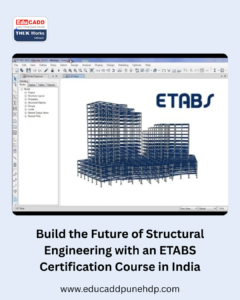
Build the Future of Structural Engineering with an ETABS Certification Course in India
Part One: Build Strong Foundations for Structural Engineering
Discover the Power of Modern Structural Analysis
ETABS is widely used for analyzing and designing building structures. The software provides an integrated environment where engineers can create structural models, apply loads, perform analysis, and review design results. Instead of handling complex calculations manually, engineers can use ETABS to develop efficient digital models and evaluate structural behavior. Therefore, learning this software can improve both productivity and technical confidence. An ETABS Certification Course in India introduces learners to important concepts such as structural modeling, load combinations, analysis methods, and design workflows. As a result, students can understand how theoretical engineering principles connect with practical structural projects.
Learn Structural Modeling with Greater Confidence
Creating an accurate structural model is one of the most important steps in any building design project. ETABS allows users to model columns, beams, slabs, walls, foundations, and other structural elements in a structured digital environment. Learners can also define materials, sections, supports, diaphragms, and structural properties according to project requirements. During an ETABS Certification Course in India, students can practice these operations through guided exercises. This practical approach helps them understand how small modeling decisions can influence analysis results. Moreover, regular practice allows learners to identify common modeling mistakes and develop a more systematic approach to structural design.
Understand Loads and Structural Behavior
Buildings experience different types of loads throughout their service life. Dead loads, live loads, wind loads, seismic forces, and other combinations must be considered during structural analysis. ETABS helps engineers apply these loads and study how structures respond to different conditions. A well-designed training program explains these concepts alongside practical software applications. Students learn how to create load patterns, load cases, and combinations while understanding their purpose in structural analysis. Consequently, an ETABS Certification Course in India can bridge the gap between classroom theory and real engineering requirements. This knowledge becomes particularly valuable when working on complex residential, commercial, and high-rise building projects.
Explore Seismic Analysis and Safe Building Design
Seismic design plays an important role in modern structural engineering, especially in areas where buildings may experience earthquake forces. ETABS provides tools that help engineers evaluate structural behavior under seismic conditions. Learners can explore concepts such as response spectrum analysis, lateral loads, storey displacement, drift, and structural response. Understanding these areas can help future engineers create safer and more reliable designs. Furthermore, practical training encourages students to interpret analytical results rather than simply generate them. Through an ETABS Certification Course in India, learners can develop the ability to review structural performance and make informed design decisions based on engineering principles.
Develop Skills for Reinforced Concrete Structures
Reinforced concrete remains one of the most common construction materials used in India. Therefore, structural engineers need a strong understanding of concrete behavior and reinforcement requirements. ETABS supports the analysis and design of reinforced concrete structural elements, making it useful for many building projects. During training, learners can understand how to define concrete materials, reinforcement properties, member sections, and design parameters. They can also study design outputs and identify areas that require attention. As learners progress through an ETABS Certification Course in India, practical exercises can help them become more comfortable with structural workflows and improve their ability to work on real-world engineering assignments.
Gain Exposure to Steel Structure Design
Steel structures require careful consideration of member properties, loading conditions, connections, stability, and structural behavior. ETABS can assist engineers in analyzing and designing steel building systems while providing useful results for engineering evaluation. Students can learn how to create steel members, assign sections, apply appropriate design parameters, and review design results. This experience expands their knowledge beyond reinforced concrete structures. Additionally, working with different structural systems improves problem-solving skills. An ETABS Certification Course in India that includes both concrete and steel applications can therefore provide a broader foundation for students who want to pursue careers in structural design and analysis.
Turn Classroom Knowledge into Practical Project Skills
Software knowledge becomes more valuable when learners understand how to apply it to practical projects. A strong ETABS training program should therefore include project-based learning rather than focusing only on software commands. Students can work on building models, define structural systems, apply loads, perform analysis, and interpret results. They can also learn how engineers organize project information and prepare design outputs. This practical experience helps learners understand the complete workflow from initial modeling to final evaluation. As a result, an ETABS Certification Course in India can prepare students to approach structural assignments with greater confidence and professional awareness.
Part Two: Transform ETABS Skills into Career Opportunities
Strengthen Your Professional Engineering Profile
Employers increasingly value candidates who can combine engineering fundamentals with practical software skills. A certification can demonstrate that a learner has completed structured training and understands essential ETABS workflows. However, certification becomes more meaningful when supported by practical knowledge and project experience. Students should therefore focus on developing a portfolio that demonstrates their ability to create models, perform analysis, and interpret engineering results. An ETABS Certification Course in India can support this development by giving learners a structured path for improving their technical abilities. With consistent practice, students can become better prepared for interviews, internships, and entry-level structural engineering positions.
Prepare for Real-World Structural Engineering Projects
Professional structural projects involve more than creating a model. Engineers must understand project requirements, coordinate with architects and other disciplines, review design assumptions, and communicate technical information clearly. ETABS skills can contribute significantly to this workflow. Training can help learners understand how structural models relate to architectural layouts and construction requirements. In addition, project-based assignments can introduce students to practical challenges that they may encounter in professional environments. By completing an ETABS Certification Course in India, learners can gain exposure to realistic structural workflows and become more familiar with the responsibilities associated with structural analysis and design.
Improve Accuracy, Productivity, and Design Coordination
Modern engineering companies rely heavily on digital workflows because they can improve coordination and reduce repetitive tasks. ETABS enables engineers to organize structural information within a comprehensive modeling and analysis environment. When used correctly, the software can help professionals evaluate design alternatives and review structural behavior more efficiently. Learners should also understand that software does not replace engineering judgment. Instead, it supports engineers in making informed decisions. Therefore, an ETABS Certification Course in India should combine software training with engineering concepts, result interpretation, quality checks, and professional practices. This balanced approach can create stronger and more responsible structural engineering professionals.
Expand Opportunities Across the Construction Industry
ETABS skills can be useful across several areas of the construction and infrastructure sector. Graduates may explore opportunities with structural consultants, engineering firms, construction companies, design offices, and infrastructure organizations. Depending on their qualifications and experience, they may work toward roles such as structural design engineer, structural analysis engineer, junior structural engineer, BIM-related professional, or design consultant. However, career growth depends on more than completing a course. Strong fundamentals, project exposure, communication skills, and continuous learning also matter. An ETABS Certification Course in India can provide an important starting point for learners who want to build a long-term career in structural engineering.
Learn Continuously as Engineering Technology Evolves
Engineering technology continues to evolve, and professionals must keep developing their skills. New workflows, digital collaboration platforms, building information modeling, automation, and advanced analysis methods are influencing the construction sector. Therefore, learning ETABS should be viewed as part of a broader professional development journey. Students can strengthen their profiles by learning related tools, improving structural engineering knowledge, and following industry developments. An ETABS Certification Course in India can provide a strong foundation, while continuous practice can help professionals remain competitive. Most importantly, learners should develop the habit of understanding why a particular engineering method is used rather than simply memorizing software commands.
Choose Training That Focuses on Practical Learning
Selecting the right training environment can make a major difference in the learning experience. Students should look for programs that provide experienced trainers, structured course content, practical assignments, project-based exercises, and opportunities to clarify technical doubts. Training should also encourage learners to interpret results and understand the engineering logic behind every step. A professional learning environment can make complex concepts easier to understand and practice. Before enrolling, students should review the curriculum, training methodology, project exposure, certification process, and career support available. Choosing a practical ETABS Certification Course in India can help learners gain skills that are more relevant to actual workplace requirements.
Build Your Future with Specialized Structural Skills
Structural engineering offers exciting opportunities for individuals who enjoy design, mathematics, technology, and problem-solving. ETABS can help learners convert structural engineering concepts into detailed digital models and analytical workflows. By combining software skills with strong engineering fundamentals, students can become more prepared for the demands of modern construction projects. Whether you are a civil engineering student, recent graduate, working professional, or someone looking to upgrade your technical abilities, structured ETABS training can support your career goals. With dedication and practical experience, an ETABS Certification Course in India can become a valuable step toward building a future in structural engineering.
Conclusion: Design Tomorrow’s Structures with Confidence
The future of structural engineering belongs to professionals who can combine technical knowledge, digital skills, and practical problem-solving abilities. ETABS provides engineers with powerful capabilities for structural modeling, analysis, and design, making it an important skill for today’s construction industry. However, the real value comes from understanding the engineering principles behind the software and applying them correctly to practical projects. An ETABS Certification Course in India can help learners develop this combination through structured training, hands-on practice, and project exposure. Start building your technical expertise today, strengthen your professional profile, and take a confident step toward a rewarding career in modern structural engineering.

